
New Logic Lion’s Mane Supplement with Two Clinical Studies Reveals the Power of Lion’s Mane Mushroom
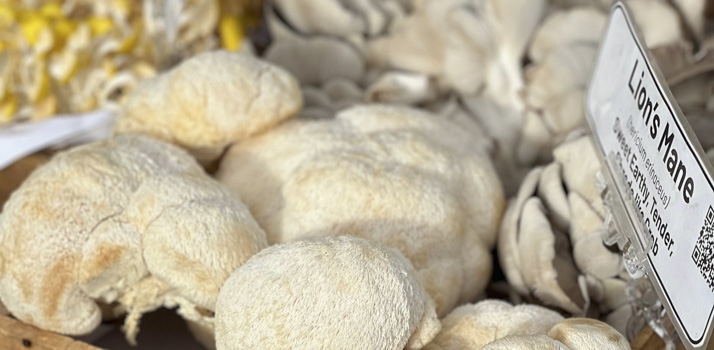
A new form of lion’s mane, standardized to the active compounds called beta-glucans, is changing what researchers can say about how this mushroom affects the brain.
Logic Lion’s Mane, from Of The Ancients, is one of the few products on the market with human clinical research attached to the specific extract inside the bottle. As of this year there are two studies, not one, and together they cover something the lion’s mane category has never been able to show before: what the mushroom does in the first two hours, and what it does after six weeks.
Here is what the research found, and why the form of lion’s mane you buy turns out to matter more than the milligrams on the front of the label.
Beta-glucans, and why the number on the label matters
Start with the compound, because it explains everything that follows.
Beta-glucans are polysaccharides that make up much of a mushroom’s cell wall. In the supplement world they serve a second purpose: they are the marker used to verify that what is in the capsule is actually mushroom.
That verification matters more than most shoppers realize. A large share of lion’s mane on the market is mycelium, the root-like stage of the fungus, grown on grain such as rice or oats. At harvest the mycelium and the grain cannot be fully separated, and independent testing has repeatedly found products where much of the contents is starch from the growing medium rather than mushroom.
Here is the catch. Starch is also a polysaccharide. So a label reading “40% polysaccharides” can be technically accurate while describing mostly grain. A stated beta-glucan percentage cannot be faked the same way, which is why it has become the yardstick serious manufacturers use.
There is a second obstacle. Mushroom cell walls are built largely from chitin, the same material found in insect shells, and human digestion does not break it down well. Whatever sits inside those walls is largely unavailable to you unless the mushroom has been extracted. Hot water and similar methods rupture the wall and release the compounds. A raw powder has had none of that done to it.
Logic is built around MycoThrive, a standardized lion’s mane extract produced by Applied Food Sciences. It is 100% fruiting body, the visible mushroom rather than the mycelium, sourced from Finland, and standardized to beta-glucans so that every serving delivers a consistent amount.
One more detail that separates it from the shelf: it is a liquid extract made in vegetable glycerin rather than alcohol. Most tinctures use alcohol because it is cheap and pulls compounds efficiently out of plant material. Glycerin extraction is slower and costs more, but it produces something you can add to coffee or water without the burn, and without alcohol in a supplement taken every morning. A daily serving is 970 mg, split into two doses.
The first study: measurable change within two hours
Researchers at the Center for Applied Health Sciences gave 40 healthy adults a single 1,000 mg dose of the MycoThrive extract, then tested them at one hour and again at two.
The design was the kind researchers consider gold standard. Randomized, double-blind, placebo-controlled and crossover, meaning every participant served as their own comparison. All 40 finished the trial.
Two hours after that single dose, participants were measurably faster on a working memory task and quicker on a mental arithmetic test than they had been at the start of the session. On a standard happiness questionnaire, scores improved inside the first hour.
The study was published in the journal Nutrients in December 2023. Its authors described it as the first study to examine lion’s mane and cognitive performance in healthy adults, as opposed to people already experiencing cognitive difficulty.
The improvements were measured against each participant’s own starting point. The extract did not pull significantly ahead of the placebo group in the head-to-head comparison, a limitation Of The Ancients publishes on its own website rather than leaving out.
The trial also tested a caffeinated comparator, which raised participants’ blood pressure over the session. The lion’s mane did not.
The second study: 45 days, and a result nobody expected
The newer research is the more interesting of the two.
The same laboratory ran a 45-day trial in 87 healthy adults aged 40 to 65, published in the Journal of Translational Science. Participants were split into three groups, each taking one gram a day for six weeks.
The first group took the MycoThrive fruiting body extract. The second took a commercial mushroom blend made from mycelium and fruiting body, the format a large share of the category sells. The third took a placebo.
By day 45, the fruiting body group reported significant improvements from where they started in day-to-day memory, concentration, mental clarity and focus.
But the finding that stands out is not a cognitive one.
Only the fruiting body group showed a significant increase in Faecalibacterium prausnitzii, a bacterium in the human gut and one of the body’s principal producers of butyrate, a compound involved in maintaining the intestinal barrier and regulating inflammation.
The mycelium blend, at the same daily amount, over the same six weeks, inside the same study, did not.
Two mushroom products carrying the same species name on the label. Only one moved it.
Researchers have been interested for years in whether the gut influences mood and cognition through pathways like this one. That work is early and nobody should oversell it. What is concrete here is narrower: in a controlled head-to-head, the form of the mushroom produced a different measurable biological result.
Why hericenones sit at the center of the fruiting body argument
Beta-glucans are the quality marker. They are not the whole story on cognition.
Lion’s mane also contains hericenones, a group of compounds concentrated in the fruiting body and most closely associated with the mushroom’s cognitive research. Erinacines, a related group, appear mainly in mycelium. The two stages of the fungus are chemically different, which is why treating them as interchangeable has always been a stretch.
Fruiting body costs more to produce. Until this year, the case for paying that premium rested on chemistry and sourcing. The 45-day trial is the first controlled human comparison in which the distinction produced a different outcome.
What to know before buying
Both trials used 1,000 mg per day of the powdered extract. Logic delivers 970 mg per day of the same standardized ingredient in liquid form. Close, not identical, and the company states the difference rather than rounding up.
Neither study showed the extract beating placebo outright, and larger and longer trials are needed, something the researchers called for directly. Of The Ancients publishes both studies with full citations and limitations on its clinical evidence page, including a disclosure that the first trial was funded in part by the ingredient supplier.
For anyone shopping this category, four questions separate a serious product from an expensive one. Does the label specify fruiting body, or only the species name? Is there a stated beta-glucan percentage rather than a total polysaccharide figure? Is it an extract or a raw powder? And can you obtain a certificate of analysis matching the lot number on the bottle?
In a category where most products are sold on a species name and a stock photograph, a company publishing what its own research did not find is worth noticing.
Logic Lion’s Mane is available from Of The Ancients.
Sources
La Monica MB, Raub B, Ziegenfuss EJ, et al. “Acute Effects of Naturally Occurring Guayusa Tea and Nordic Lion’s Mane Extracts on Cognitive Performance.” Nutrients. 2023;15(24):5018. doi:10.3390/nu15245018
Center for Applied Health Sciences. 45-day randomized, double-blind, placebo-controlled trial of MycoThrive Lion’s Mane. Journal of Translational Science.
Natural Society does not provide medical advice, diagnosis, or treatment. Dietary supplements are not intended to diagnose, treat, cure or prevent any disease. Consult a healthcare professional before starting any supplement.
