
The World Just Got Another Step Closer to Creating GMO Humans
Scientists in Britain have recently been given the green light to edit the genes of human embryos for research, leading to fears the practice could lead to “designer babies.”
“Our license committee has approved an application by Kathy Niakan of the Francis Crick Institute to renew her laboratory’s research license to include gene editing of embryos,” the Human Fertilization and Embryology Authority (HFEA) said in a statement.
Niakan will begin editing embryos using the CRISPR-Cas90 technique, which allows scientists to edit out part of the DNA code so that scientists can see if it was needed. [1]
The embryos must be destroyed within 14 days and can only be used for basic research.
Niakan and her colleagues want to deactivate genes in leftover embryos from in-vitro fertilization (IVF) clinics to find out if it deters development.
About 50% of fertilized eggs do not develop properly and scientists believe that faulty genetic code is to blame. Scientists say that if they could determine which genes are crucial for cell division, it would allow them to screen out embryos with faulty DNA, potentially reducing miscarriages and aiding in fertility.
“We would really like to understand the genes that are needed for an embryo to develop into a healthy baby,” Niakan told a briefing in central London last month.
“Miscarriage and infertility are extremely common but they are not very well understood. We believe that this research could improve our understanding of the very earliest stages of human life. [2]
The initial pilot will include as many as 30 embryos, and the researchers would like to on another 3 genes, which could bring the total to 120. The experiment must first pass an ethics evaluation.
Ethics are at the center of the gene editing controversy and the global outrage that followed the Chinese scientists’ announcement. Critics fear that allowing embryos to be edited could eventually lead to designer babies and genetically modified humans.
A spokesperson for HFEA insists that is not the purpose of her research.
“The committee has added a condition to the license that no research using gene editing may take place until the research has received research ethics approval.
As with all embryos used in research, it is illegal to transfer them to a woman for treatment.”
In November, British scientists were among a group of 150 European experts who called for a worldwide ban on genetic editing of embryos, saying the practice could open the door to “irrevocably altering the human species.”
“Allowing the gene editing of embryos opens the road to genetically modifying all the descendants of a person as well as full blown eugenics which was condemned by all civilized societies after the Second World War,” warned Dr. Calum MacKellar, Director of Research of the Scottish Council on Human Bioethics.
“It is the very future of the way in which societies accept persons with disabilities that is at play since such gene editing procedures infer that they should not have been brought into existence.”
Gene editing may have the potential to eradicate serious diseases, but it also has the potential for unexpected side effects that could damage healthy strands of DNA. Not to mention the unforeseeable consequences of tinkering with the human genetic code in such a direct way.
Even the inventors of CRISPR technology urge caution.
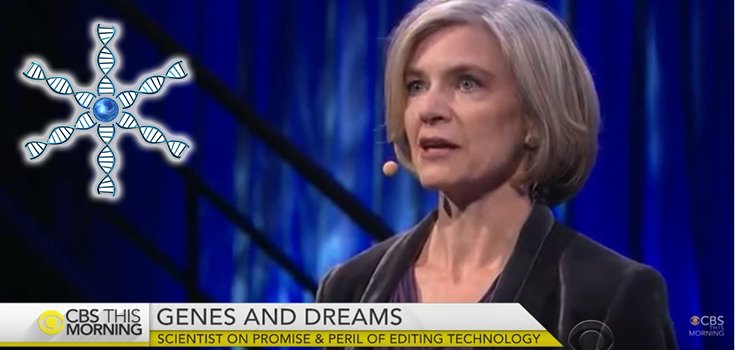
“It is very important to consider the unintended genetic consequences of making an intended change, because there are all sorts of genetic interactions that occur in cells during cellular development — especially in humans, but also other organisms,” said Jennifer Doudna, a professor of molecular and cell biology at the University of California, Berkeley, and one of the inventors of CRISPR-Cas9 gene editing.
Jennifer Doudna speaks on the technology in this video:
“I think just getting a handle on how a desired change impacts the function and development of an organism or embryo is going to be a big part of this, and it could be decades of work. But this needs to be discussed in the context of this meeting and future meetings so that we can really determine the path forward for gene editing.” [3]
Sources:
[1] Reuters
[2] The Telegraph
[3] LiveScience

A problem with many genetic modifications is that genes are considered ‘in isolation,’ in and of themselves, whereas they are interactive – what affects one gene (modification or deletion) may have untold effects on other genes.
That scary lady, Dr. Niakanstein said “We would really like to understand the genes that are needed for an embryo to develop into a healthy baby.” So they can develop a vaccine to circumvent that, I’m sure.
Well GMO food worked out so well…
Like In The Days Of Noah….
It’s not right to interfere with the natural order of the creators work!