
Is this Toxic Chemical Hiding in Your Toothpaste?
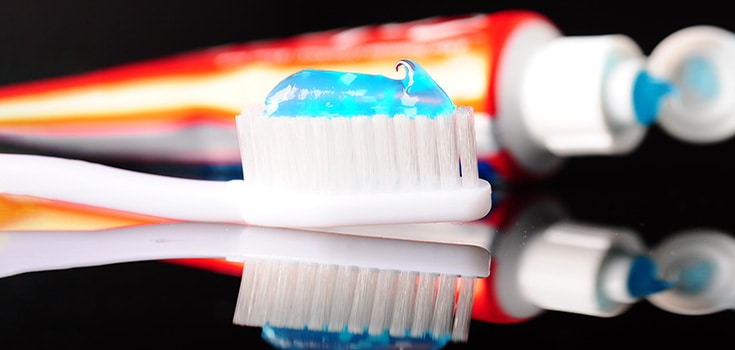
“Say that again and I’ll wash your mouth out with soap!” Did you ever get this threat from your parents as a kid if you used foul language? The irony is, you’re likely already washing your mouth out with soap on a twice daily basis.
How is that possible? A compound called SLS, or sodium lauryl sulfate, lurks in not just your toothpaste, but almost all products coming into contact with your skin, scalp, and eyes: that includes eye makeup, hair sprays, lipsticks, sunscreen, toothpaste, laundry detergent, conditioner, perfumes, and shampoo. Sodium lauryl sulfate (SLS) is everywhere, and it’s not doing good things for our health.
What is Sodium Lauryl Sulfate (SLS) Exactly?
SLS is the sodium salt of a lauryl sulfate and it’s the stuff that gives you that foamy effect that makes you feel like your shampoo or toothpaste are “working.” SLS is an industrial agent that aids in the manufacturing process. It’s an emulsifier that’s added to these products because it improves their consistency when they’re manufactured in large batches and ensure they have a uniform mix.
The main takeaway is this: SLS is not added for any kind of benefit for the product or the user of that product (you). It’s added to aid the process of mass production.
But what’s wrong with SLS, exactly?
The real problem with SLS is that there’s a lot we don’t know about it. Organizations on the web claim that the backlash against SLS is a conspiracy to help brands marketing their products as Organic and all natural sell more product and that there isn’t concrete proof – and they’re right! There is no medical study that I can point to that says SLS is definitely a carcinogen. That said, SLS has been linked with cancer and has been proven to cause irritation, rashes, allergic reactions, and organ toxicity.
But why wait for definitive, concrete proof when it might already be too late?
Opting for SLS-free toothpastes, shampoos, and detergents won’t cause you to miss out on anything – you can only improve your health by doing this. SLS is added to the same stuff I use to scrub the floor of the garage – and I don’t feel compelled to stick to SLS-containing Crest, Colgate, and the other mainstream toothpastes (and shampoos, soaps, etc.) when there are quality alternatives that don’t contain SLS.
Can Toothpaste With SLS Cause Canker Sores?
As a dentist I recommend to my patients suffering from canker sores that they switch to an SLS-free toothpaste. Anecdotally speaking, they’re often using Crest or Colgate, which contain SLS, when I make this recommendation. After about a week, 50% of them tell me their canker sores have disappeared.
I also frequently hear stories from patients and have experienced first hand, when using an SLS-free toothpaste for a long time and switching to an SLS-containing toothpaste, that canker sores reappear after a few days.
There is little research on the subject, but since SLS is an irritant and a detergent, it makes sense that it could contribute to canker sores.
If you suffer from canker sores, allergic reactions in the mouth, or other types of irritation, try switching to an SLS-free toothpaste for 30 days and track your results to see if there’s an improvement.
Additional Sources:

I became curious if Tom’s of Maine (Colgate) has SLS in their Fluoride free toothpaste and yes it does. I also noticed the recycling code is #7 but, states it is BPA free. Who wants to bet that they just switched over to BPS? I think I shall send them an inquiring E-Mail to find out.
There was a day when Tom's of Maine was family run, and proudly touted that they felt SLS was not a good thing and that they could manufacture their products without it.
Then they were bought by a corporation and then SLS appeared in the product. I used to recommend the product.
Boo – I just switched to Tom's. Any suggestions on toothpaste that don't have SLS or fluoride?
I use Jason's toothpaste available at Whole Foods but can be purchased for less on Amazon.
This article is seriously flawed, SLS is made from coconut oil… it is true that it is in the harshest of industrial cleaners, but in other formulations it is used as a wetting agent in eye drops and the finest of shampoos and personal care products. To say that this is causing canker sores is hard to get my head around, as they are caused by a virus, probably motivated by some sort of new or cyclic stress, there are many steroid products with dental oral base available to promote healing of these sores within a day or so.
Cold sores and canker sores are often confused as being the same. Cold sores, also called a fever blister or herpes simplex type 1, are groups of painful, fluid-filled blisters. Unlike canker sores, cold sores are caused by a virus and are extremely contagious. Also, cold sores typically appear outside the mouth — usually under the nose, around the lips, or under the chin, while canker sores occur inside the mouth.
Steroids have their own issues and it would be better not to have to take them if it can be avoided.
Mark Burhenne DDS
How can we make out SLS-free toothpaste?
Hi Mark,
It would be helpful if you could recommend some specific toothpaste brands that does not contain slf. I went to a natural foods grocery store and all of the toothpaste brands contain it. Even Tom's.
I found a recipe here: http://www.diynatural.com/homemade-toothpaste-rec…
Thanks a lot for a very important and valuable piece of information.
I have had a sensitivity (small boils form on tissue just behind my molars) to toothpaste for over 35 years. I have experimented from time-to-time over the years to see if the sensitivity still existed, but after a month of using the different pastes and enduring a terribly dry mouth, the same issues would come back. During the times that I used the toothpaste I think that I actually didn't brush as well because the mint kind of interfered with me being able to really feel with my tongue, if my teeth were clean or not. Where as when I was brushing without and only water, and occasionally baking soda, my teeth and gums were their cleanest and healthiest.
For people who want to to avoid toothpaste altogether – what do you think about brushing without toothpaste and oil pulling (coconut oil)?
As for SLS – companies include SLS for many number of reasons; as a lubricant, for it's lather, for it's cleaning properties. The most harmful proven side affect from SLS is irritation. But there are many "all natural products" (although SLS is natural, processed compound) ingredients in any number of products that can/may cause irritation to anyone who is sensitive to it. How many people do you know who are sensitive to jojoba, tree nuts, pectin, etc..? Yet, some shampoos and soaps include jojoba, almond, or other oils. Does SLS cause cancer that can kill you? Hmm, no one really knows, possibly. Can an "all natural and organic" body scrub containing almond oils and ground shells kill someone with an allergy to them? ABSOLUTELY! How about a homemade loaf of bread, with all natural and organic ingredients… can that make a lot of people sick? Absolutely!
And how is that SLS unlike bread? Natural ingredients, processed, added to other ingredients, heated…. How are they different? One is guaranteed proven to make a lot of people very sick, the bread!
One last note…have you ever tried a shampoo without SLS or other ingredient to help it lather or lubricate?
If you don't have long hair, it probably doesn't effect you much, but as a woman with long hair…the shampoo goes nowhere. It's the lather and the lubricating properties that helps us move it around.