
The secret is out – smoking causes harm to the body. Anything from smoking a cigarette to inhaling the toxic fumes from cigarettes around you can cause unwanted, detrimental effects. So why not stop smoking now? It’s been decades since big tobacco companies claimed their cancer sticks caused no or little harm, and for good reason. Big tobacco has known that cigarettes are deadly, but for decades the harmful effects of smoking have been their best kept secret. Unfortunately, they can no longer blatantly lie about the ill effects of smoking.
There is no hiding anymore.
It is now widely known, the harmful effects smoking has on the body, the environment, and the cash that would otherwise be in your pocket. We all know that smoking is “bad”, but do we all really know about the issues it can help to manifest, health-wise and other? It seems that most people who already smoke don’t want to quit despite the cost of smoking and the benefits of quitting smoking, even if they say they do.
This page is to help you not only be aware of everything smoking can cause, but also help to change your view and thoughts towards smoking. The information on here will also inevitably and purposefully lower the chances of people smoking who don’t smoke, and will educate so that you can apply this knowledge and potentially help others.
So what are the problems associated with smoking?
1. The True Cost of Smoking
Smoking is not a cheap venture in any way, shape or form. But it seems that the price tag on a pack of cigarettes hardly deters many from partaking in the activity, even in the face of harsh economic times. Although the price tag of a single pack of cigarettes may not be intimidating enough for those experiencing the relaxing effects of smoking, maybe a look at the overall cost of the habit would make somewhat of an impact.
Today a pack of cigarettes costs about $6/pack. The price varies based on location and taxes, but let’s use $6/pack for calculations. At $6/pack, if someone smokes 1 pack a day every day, the annual expenditure on cigarettes is $2190/year. But unfortunately the costs don’t stop there.
The Cost of Smoking for Your Body | Smoking Shortens Your Life

In addition to the cost of cigarettes, you’re also giving up hours or days of your life. According to this calculator, smoking 1 pack a day for a year results in about a loss of 55 days from one’s life. Of course it is hard to say exactly how many hours or days will be shed off from smoking while there are so many other variables to consider, but we do know that the activity shortens life.
Here you can calculate how much it costs you to smoke in terms of money. Keep in mind that the price per pack you enter has not been that price forever. So if you’ve been smoking for 20 years, the total calculation will be a bit elevated since cigarettes did not cost as much 20 years ago. But then again, prices are relative.
In 2004, it was estimated that the actual cost of smoking was nearly $40 per pack. Factors in this total include:
- $33/pack for the cost of early deaths, smoking related disabilities, and other factors (which includes $20.28 a pack due to reduced life expectancy)
- $5.44/pack for the cost of the effect of second-hand smoke on significant others
- $1.44/pack for the cost of the effect of second-hand smoke on the society as a whole
With a pack of cigarettes costing approximately $40, it is estimated that someone who smokes would spend $171,000 over a lifetime! More recently, a pack of cigarettes is said to cost up to a whopping $150/pack.
Hidden Cost of Smoking
The cost of smoking goes far beyond a pack of cigarettes. There are numerous “hidden” costs of smoking which are associated with smoking that many people don’t even think about or consider. It’s easy to ignore these costs because they aren’t as clearly noticed as simply buying a pack of cigarettes. Some of these hidden costs include:
- Increased Life Insurance rates – Due to being at a greater risk of dying at an early age, smokers may have to pay higher life insurance premium payments.
- Increased Health Insurance rates – Similar to life insurance, smokers may pay higher medical insurance premium payments since they are at a higher risk for contracting medical problems.
- Increased Health Care costs – People who smoke generally have more medical problems than those who don’t smoke, so they must pay more to take care of these problems.
- Increased medication use – More medical problems lead to more medications, increasing personal costs even further.
- Increased Home Owner’s Insurance rates – People who smoke have a higher chance of burning down there house. This higher chance is reflected in higher home owner’s insurance premium payments.
- Decreased value of your house – Hardly anyone likes a smoke-filled house. It creates a bad smell and causes discoloration. This decreases the value to potential buyers.
- Increased Car Insurance rates – Smokers have an increased chance of getting into a car accident, and thus this is reflected in higher car insurance premium payments.
- Less value for your car – Due to the foul odor smoke leaves, the value of your car suffers and it’s resale or trade-in value decreases.
Although the above costs may be enough to cause a permanent hiatus from smoking, sometimes emotions driven by the opposite sex or the desire to excel in a sport will be the reasons for quitting.
Is the true cost of smoking really worth it?
2. The Effects of Smoking on the Human Body
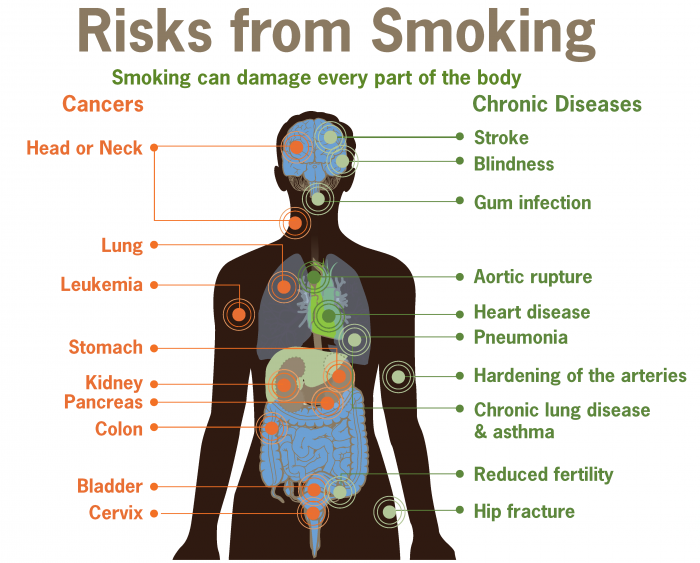
Smokers face an increased risk of countless health problems. Oftentimes, the potential of suffering from any of these health problems often scares people more than knowing they will die sooner. People think in images, so it may be easier to create images of yourself not being able to breath, or tied up to some device.
New research and hundreds of studies widely available to the public proves how bad cigarettes can really be. Cigarettes have been shown to cause:
- Serious Genetic Damage Within Minutes
- Throat Cancer
- Stomach Cancer
- Lung Cancer
- Bladder Cancer
- Pancreatic Cancer
- Increased Stillbirth Risk
- Heart Attacks
- Stroke
- Chronic Obstructive Pulmonary Disease (COPD)
How would you feel if I told you that with every cigarette comes a dose of insecticide, car exhaust, gas chamber poison, ant poison, floor cleaner, mothballs, and nuclear weapons? Probably not great. The following have been found to help make-up cigarettes:
- Insecticide – nicotine
- Car exhaust – carbon monoxide
- Gas chamber poison – hydrogen cyanide
- Ant poison – ammonia
- Mothballs – naphthalene
- Nuclear power – radioactive compounds
Smoking Causes Genetic Damage

Earlier in 2011, research was published expressing the effects of smoking on DNA. The alterations found in DNA due to smoking are not favorable, and research shows DNA changes can take place just minutes after inhaling.
The scientists focused on cancer-causing agents known as polycyclic aromatic hydrocarbons, or PAHs. Using 12 volunteers, the scientists pinpointed one pollutant in particular called phenanthrene, which is one of the many PAH’s found in cigarette smoke. It was found that phenanthrene forms a toxic substance in the blood which leads to the DNA mutation within minutes of inhaling.
“The smokers developed maximum levels of the substance in a time frame that surprised even the researchers: just 15-30 minutes after the volunteers finished smoking,” researchers conducting the study stated.
The study was also the first investigation of human metabolism of a PAH delivered specifically by inhalation of cigarette smoke without any interference by air pollution or diet.
Passive Smoking Shown to Increase Stillbirth Risk
By now mother’s should know not to smoke while pregnant, as it is very unhealthy for the unborn child. But research (and logic) also show that passive smoking can also be detrimental to the unborn child. Pregnant women who smoke are setting their unborn children up for:
- low birth weight
- premature birth
- birth defects
- heart problems
Researchers from the University of Nottingham found that pregnant women who are exposed to smoke 23% more likely to have a stillborn birth and 13% more likely to have a baby with defects. They looked at 19 studies from around the world and used these studies to pull the research together.
These risks could not only be an outcome of second-hand smoke inhaled by mother’s-to-be, but also could be a result of men who smoke due to cigarettes negative effects on sperm development.
It is unanimous that chemicals in cigarettes significantly increases the risk of serious pregnancy complications.
Evidence Ties Smoking to Throat & Stomach Cancer
With the combination of 33 past studies, it was found by Italian researchers that smokers are more than twice as likely as nonsmokers to develop cancer in their esophagus or in a part of the stomach called the gastric cardia. Unfortunately, some of the studies also found that these increased risks remained at high levels even years after the smoker quit.
The study which pulled the research from the 33 previous studies was published in the journal of Epidemiologhy. Most of the 33 studies involved a small group of people with either esophagus or gastric cardia tumors against a cancer-free group. But 3 studies were large and followed over a period of time.
Smokers Often Unaware of Chemical-Cocktail in Cigarettes
Do you have any idea what ‘ingredients’ go into making cigarettes? You would be surprised to hear what things people inhale with each puff of a cigarette – besides nicotine, I mean.
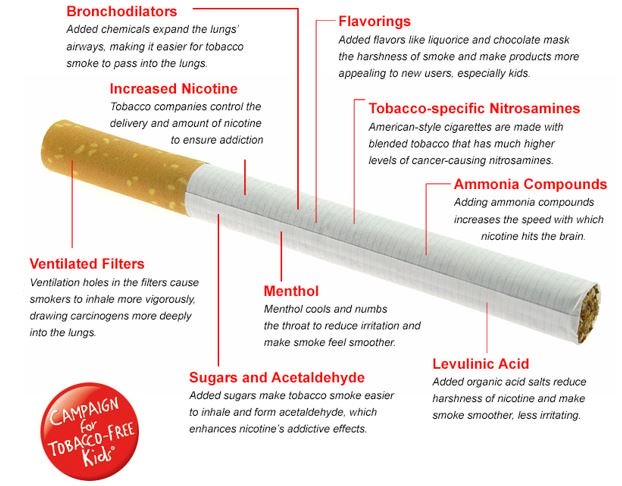
There are about 4,800 chemicals in a cigarette, many of which are carcinogenic; but researchers from the University of North Carolina, Chapel Hill, found that the majority of smokers don’t know what they’re inhaling.
For the study, data was analyzed from 5,014 American adults over age 18 who were contacted in a national telephone survey. The survey focused mainly on low-income areas, which are more likely to include people who use tobacco and suffer smoking-related health problems – the impoverished, the lesser educated, and sexual minorities.
Read: 7 Huge Detrimental Effects of Smoking
The team found that 27.5% of the respondents had sought information about the chemicals in tobacco smoke that can cause cancer and other adverse health effects.
Of the participants who had searched for information, 37.2% were between the ages of 18 and 25 – the largest percentage – and 34.3% of them were smokers. Some 26% of those who were non-smokers also said they had looked for information on cigarette smoke.
The biggest finding was that most of the participants didn’t know what’s contained in cigarette smoke, and half of them said they’d like to see that information printed on cigarette packages.
Cigarette smoke contains arsenic, ammonia, acetaldehyde, coumarin, and various other substances, most of which are known to be toxic when inhaled or ingested. The FDA lists the known toxins on the agency’s website.
However, none of this information is available to the average person who buys a pack of cigarettes. Instead, the Surgeon General provides rather vague warnings on cigarette packs about the dangers of smoking.
And since there’s such a vast number of chemicals in cigarette smoke, it’s impossible to gauge just how many health problems are caused by smoking, or how serious they are.
Read: What are the Immediate and Long-Term Benefits of Quitting Smoking?
By making tobacco chemical information available to the public and tobacco industry practice more transparent, those seeking this information may be less likely to start smoking and more likely to quit.
The researchers found a nugget of good news, however; more than 80% of smokers interviewed for the survey expressed a desire to kick the habit.
The study was published in BMC Public Health.
3. The Benefits of Quitting Smoking | Amazing Things Happen if You Stop Smoking Right Now
What happens when you quit smoking? If a cigarette is in your mouth right now, finish it. Once you finish it, don’t ever pick up another one. If you did this right now, your body would go through amazing changes starting just 20 minutes after you finish that cigarette. Here are the benefits of quitting smoking and a timeline of what will happen once you quit smoking. To reverse the effects of smoking, simply quit. Here’s why.
- In about 20 minutes, your blood pressure and pulse rate will decrease, and the body temperature of your hands and feet will increase.
- At approximately the 8-12 hour mark, the carbon monoxide level in your blood will decrease to normal and your blood oxygen level will increase to normal.
- At 24 hours the chance of you having a heart attack decreases significantly.
- At about 48 hours, nerve endings begin to regrow and your ability to smell and taste is enhanced.
- Between 2 weeks and 3 months, your circulation improves, walking becomes easier, and coughing and wheezing is experienced less often. Phlegm production decreases and at about the 3 month mark, lung function is significantly improved.
- Between 1 and 9 months, you will experience all of the benefits already listed in addition to less sinus congestion, fatigue, and shortness of breath. Cilia, tiny hair-like structures that move mucus out of the lungs, also regain normal function.
- In 1 year, your risk of coronary heart disease and heart attacks is reduced by half of what it used to be when you were a smoker.
- Between 5 and 15 years, the risk of having a stroke returns to normal, before you started smoking.
- At about the 10 year mark, your chance of developing various cancers including cancer of the lungs, mouth, throat, esophagus, bladder, kidney, and pancreas, greatly decreases. Risk of lung cancer reverts to that of a non-smoker. In fact, Diet and smoking habits make up nearly 60 percent of cancer cases.
- In about 15 years, your risk of coronary heart disease and heart attack shifts to that of a person who has never smoked before. The risk of death also drops nearly to the level of a non-smoker.
Even with the exclusion of the incredible amount of money you would save from quitting, the above benefits of quitting smoking are more than convincing.
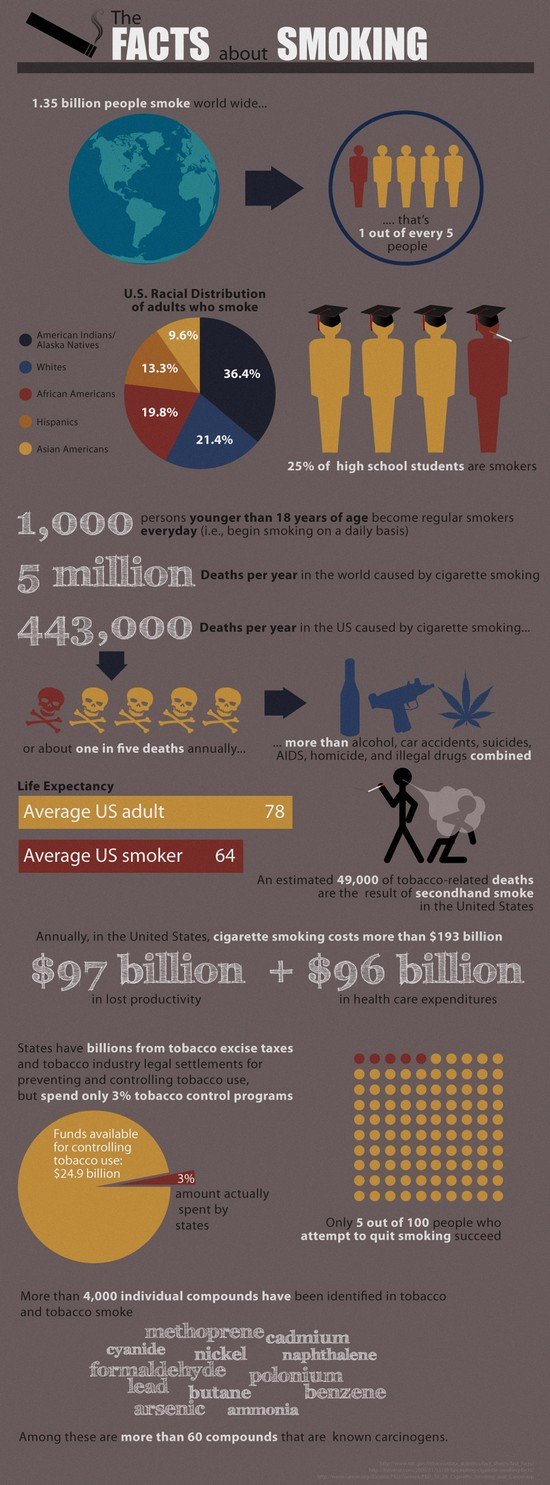
Smoking Infographic
An interesting infographic (a picture combined with information) regarding smokers in the U.S. has been created based on information provided by the Center for Disease Control and Prevention. Look closely and read carefully. This image is from late 2010, so figures do differ today.
4. Second-Hand Smoke Affects People Around You
Although the infographic above states that there are over 4,000 individual compounds identified in tobacco and tobacco smoke, recent research shows a slightly different figure. According to the CDC, more than 7,000 chemicals are found in tobacco and tobacco smoke, 100’s of which are completely toxic. Of these 7,000+ chemicals, about 70 are known to be cancer-causing substances.
Second-hand smoke, or passive smoking, affects adults, children, and the pets you love most that many people don’t even take into consideration.
Health Effects of Smoking on Adults
Second-hand smoke has two primary effects on adults who have never smoked; it increases the risk for heart disease and lung cancer.
- Breathing in second-hand smoke has immediate harmful effects on the cardiovascular system which can increase the risk for a heart attack. Individuals who already suffer from heart disease are subject to an especially high risk.
- Second-hand smoke causes exposed individuals to have an increased risk of heart disease by 25-30%
- Second-hand smoke is estimated to cause 46,000 deaths annually from heart disease. All of which are people who don’t smoke.
- Nonsmokers have a 20-30% increased risk of developing lung cancer because of second-hand smoke
- Second-hand smoke causes 3,400 lung cancer deaths a year. Again, none of these people smoke.
Health Effects of Smoking on Children
Children suffer from numerous health problems due to second-hand smoke. Tobacco smoke can cause:
- Ear infections
- Increased asthma attacks
- Respiratory symptoms such as coughing, sneezing, or shortness of breath
- Respiratory infections such as bronchitis and pneumonia
- Increased risk for sudden infant death syndrome (SIDS)
- In children aged 18 months or younger, second-hand smoke is blamed for an estimated 150,000-300,000 new causes of bronchitis and pneimonia annually. It is also responsible for about 7,500-15,000 hospitalizations annually in the U.S.
5. Second-hand Smoke and Your Pets

As one may suspect, tobacco smoke not only harms humans, it also harms the pets we love. Animals can face problems such as respiratory issues, allergies, and nasal & lung cancer in dogs and lymphoma cats.
Dr. Sharon Gwaltney-Brant, a medical director of the ASPCA’s Animal Poison Control Center, states:
Nicotine from second-hand smoke can have effects to the nervous systems of cats and dogs. Environmental tobacco smoke has been shown to contain numerous cancer-causing compounds, making it hazardous for animals as well as humans
What do you do to protect your pets? Take the smoking outside.
There are a number of studies outlining the potential dangers tobacco smoke has on pets:
- A study from Tufts University linked second-hand smoke to cancer in cats. Cats who live in smoke-filled environments are twice as likely to develop malignant lymphoma, the most common feline cancer, as cats who aren’t exposed to smoke. This disease brings down 75% of cats who are afflicted within 12 months.
- One study conducted in 2007 from the University of Minnesota found that cats have nicotine and other toxins in their urine if they live with a smoker.
- Another study conducted in 2007 conducted by Tufts School of Veterinary Medicine linked second-hand smoke to oral cancer in cats known as squamous cell carcinoma. The chance of suffering from this oral cancer is increased with more smokers in the house as well as if the cat has been exposed for long periods of time.
- In 1998, Colorado State University ran a study which found a higher incidence of nasal tumors and cancer of the sinus in dogs living in a smokers home, compared to those not exposed to smoke. Although unfortunate, dogs with nasal cancer often don’t make it past 1 year. The study was published in the American Journal of Epidemiology.
The Toxic Level of Nicotine
The toxic level of nicotine for cats and dogs is 0.5-1.mg of nicotine per pound of body weight.
One cigarette contains about 15-25mg of nicotine, with the butt of the cigarette containing about 4-8mg. Signs and symptoms of nicotine poisoning in your dog or cat include:
- Tremors, twitching, or seizures
- Drooling
- Constricted pupils
- Auditory and/or visual hallucinations
- Excitement, racing heart (but slow heart rate with small doses)
- Vomiting and diarrhea
If you think there is a chance your pet suffers from nicotine poisoning, call your vet or the Animal Poison Control Center at 888-426-4435.
6. If You Don’t Stop Smoking, Your Children Are More Likely to Smoke
There are two primary reasons children of parents who smoke are more likely to start up the bad habit.
Firstly, influence. Kids are influenced by their parents and will think it’s cool or acceptable. Parents who smoke and tell their children not to smoke because it’s bad for them often don’t get the message across since they aren’t following their own advice. Children are easily influenced and look up to their parents and family members.
Secondly, DNA of those who smoke is altered, and it carries through in the genes. Interestingly, according to a study published earlier this year in the journal Oxford Bulletin of Economics and Statistics, genders involved make a difference. To be more clear, smoking habits are generally passed from mother to daughter and from father to son, but not usually from other configurations.
“Fathers transmit their smoking habits to a statistically significant level to their sons, and the same is true of mothers and daughters,” said Loureiro. “However, if a mother smokes it does not seem to impact on the probability of her son smoking, and similarly a father that smokes does not affect his daughter.”
The study also found that the estimated probabilities of a son smoking if both parents smoke is 24%, but drops to 12% if neither of the parents smoke. The percentage for a daughter differs only slightly, with it being 23% if both parents smoke and 12% if neither one smokes.
In single-parent households, the likelihood of a son smoking if the mother smokes is 32%, and 28% for the daughter. It is easy to see how the effects of smoking continue even for generations.
7. Third-hand Smoke | A Newly Discovered Health Hazard
Third-hand is not the same as second-hand smoke; it refers to the invisible gases and particles which are left over from tobacco smoke. These toxic particles cling to hair, skin, clothing, furnishings, and just about everything in the room. Unfortunately, airing out a room by opening windows or using fans isn’t quite enough to rid the area of these invisible toxic lingerings now known as third-hand smoke.
This residue contains all of the 7,000 harmful substances including heavy metals, radioactive materials, and carcinogens. Children and pets are at an increased exposure to third-hand smoke since children crawl on the floor and pets are always walking close to and sleeping on the ground. This new research shows that breathing air in a room today where people smoked yesterday can harm the health of those who ingest it.
Some of the substances in third-hand smoke are hydrogen cyanide which is used in chemical weaponry; butane, which is found in lighter fluid; toluene, a chemical used in paint thinners; arsenic; lead; carbon monoxide; and polonium-210, an extremely radioactive carcinogen.
Solution!
Time for the most important part of this page – the solutions! There is only one real solution, as with many other issues that exist. That solution is to…
Stop Smoking!
Other than that, there are a number of things people can do to lessen effects of smoking to both yourself and people around you. Here are some things you can do.
- Cut down on smoking. If you can’t go cold turkey, try to stop smoking through gradual reduction. One of the best tools for quitting is the Emotional Freedom Technique (EFT). Don’t forget about the benefits of quitting smoking outlined earlier on this page.
- Since smokers often turn to a cigarettes because they feel “stressed”, make an attempt to cut out other sources of stress in your life. Again, this can be achieved using EFT.
- Purchase an air purifier for your home. This will reduce levels of toxins emitted from cigarettes, as well as from all other sources.
- Change your diet. Research shows that you can quit smoking naturally by consuming more of these foods.
- Wash your hands after smoking and before you touch your pets
- Keep ashtrays clean in case pets or small children get into them. Also, try to put them away after use so they aren’t around to get into initially.
- Change your clothes after smoking and wash your clothing right away. Air them out outside at the minimum.
- Smoke outside instead of inside your home to minimize third-hand smoke residue
- Be sure to throw out cigars, cigarettes, nicotine gum, smokeless tobacco, etc. in a place that can’t be accessed by pets or small children

The most important statement you must tell yourself all day every day is this:
“I am in complete control of my life. I am not controlled by anything or anyone else, and only I make the decisions.”
Realize this, and quitting will be the easiest thing you’ve ever done, but it certainly won’t be the last. Just make a firm decision that you will stop smoking now, and then get ready to experience the enormous benefits of quitting smoking.
Additional Sources:
CDC.gov/tobacco/data_statistics/index.htm